The Power of Play: Enhancing Workplace Culture at Christian Brothers Automotive
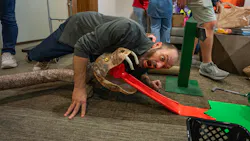
Once a year, all of the team members at Christian Brothers Automotive put down their wrenches and tablets to focus on a new goal: building the best putt-putt course. Ratchet+Wrench spoke with Christian Brothers Automotive president and CEO, Donnie Carr, about how to build a workplace culture that exemplifies the company’s “Love Your Neighbor” philosophy and how, on its 15th anniversary, a mini-golf tournament in Katy, Texas, has become a symbol of so much more than a little bit of fun.
R+W: "Love Your Neighbor" is an incredibly big philosophy. How did mini-golf become the avenue for promoting that mission?
Carr: It's a great event where you can have total team involvement. They're responsible for it; they're part of creating the course. The first couple of years, I did it by myself, and then I talked to one other guy in a duo, and he's like, "Hey, what if we just got everybody to build their own hole?" And so there was an opportunity for a team-building environment where they could really run with it. There's actually a prize for whichever hole is voted the best, and then there's some fun afterward. It's a reward where we get to hang out, play, and enjoy each other's company. So we got to put a couple of different pieces in place just by doing putt-putt.
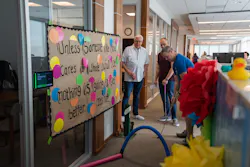
R+W: Why do you think it's important to have everyone, from the bays to the front desk, participating and being a part of this event?
Carr: Putt-putt is one of those things where every age can do it—right down from two years old to 99 or 102 years old. Because of that, I think it's an opportunity to see people for who they are. When you're just doing something that's fun, silly, and basic, it removes barriers. It helps build relationships in ways that you might not otherwise. You're having a good time and sharing a laugh together, which builds memories. Those memories can be foundational the next time you have a frustrating or tough conversation. You know, “Hey, this is a person who likes to have a good time, and they're just that—a person.” It reminds us that we can work through these things together, so I felt like that was very important.
R+W: It can be difficult for some shops to break down that imaginary barrier between the technicians and the service writers or the front desk. How has this changed the relationship between the back and front of house?
Carr: I think any opportunity to do something together—whether it's the simplicity of coming up with a creative way to put a putt-putt course inside of your shop or just playing together—helps. Once you step outside of that normal, “Hey, here's the ticket, here's the car that needs to be worked on, here's the guest that needs to be served,” and instead say, “Hey, we're going to do something outside of that, but it's still within these walls,” it just gives a different feel to the place you come to work.
R+W: Why involve team members’ families in everything from building stuff all the way to the execution?
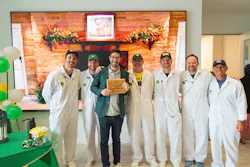
Carr: We call it our CBA Masters Putt-Putt Tournament, and we're inspired by the Masters all the time. They are an organization of excellence. They are unique in the fact that they're the only major golf tournament on the PGA Tour that has a family event the day before the tournament starts. Because of that, we're always looking for ways to engage spouses and kids. We really want to be all about family. We know if they see that this is an amazing place where their spouse gets to work, they're going to be even more invested in us long-term.
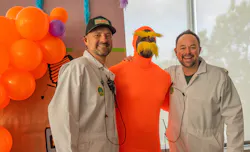
So we said, “Hey, what's a way we can do this?” We realized we could bring the kids up the night before because the golf course is already set. To be honest, we had a lot of parents saying, “Hey, my kids really want to come play the course.” Personally, my kids had been asking for years, and I was always like, “No, I'm sorry, it's adults-only.” So finally, I was like, how can we figure out a way to get everybody else involved? We've done trunk-or-treats and different things, but this was just a great way to kill two birds with one stone. Since we were already serving dinner, we were like, “Hey, we'll just expand it. We'll invite the families up, they can play that night, and then we'll do the serious tournament—just like the Masters—starting the next day.”
R+W: In communities like Katy, where things are pretty tight-knit, how does this help you whenever you're looking to recruit?
Carr: We've gotten a lot of team members through referrals. Our policy is that anytime we have a new opportunity, it first goes to our internal team members here to see if anyone is interested. Second, we ask for referrals, like, “Hey, who do you know that you think would be a good performance and culture fit for CBA?” We look at what we need in the job description and responsibilities, and ask, “Who do you think would fit in with that servant leadership—that care, and that desire to love your neighbor and serve those around you?”
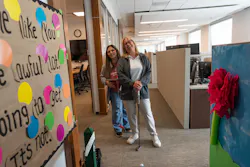
I would say easily over half of our new team members are referrals, if not more. Eventually, if we need to go to an outside source, we do that as well, because there are a lot of talented people we don't know yet whom we want as a part of this organization. But yeah, it's absolutely been helpful. I mean, we hear from a lot of our team members' kiddos saying, “Hey, I want to work at Christian Brothers one day.” And we're like, “Hey, it's not all putt-putt! There is some actual work that gets done here.” But we love that they get excited, whether they are 6 or 14 years old, to say, “Hey, I want to be a part of that organization.”
R+W: Pausing work to allow people to build these courses and engage with each other can be intimidating. How do you quantify the return on investment for this sort of event, where a little bit of work time is traded off for a soft bonus that is so much bigger than those few hours?
Carr: I think we all know that, whether we like it or not, when we come to work, we don't actually do non-stop work the entire time we're there. If we are just intentional about the fact that there are going to be times when standard work isn't getting done, we can choose to make those moments as impactful as possible to make a real difference.
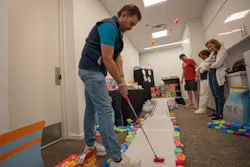
One of my favorite things is being here at 10:00 a.m. on that Thursday morning when the entire office looks like a giant putt-putt course with things everywhere. But by noon, you could never tell that a putt-putt event just took place inside of this office. It is heads down, and people are getting things done. You just get this renewed feeling of, “Hey, I got to have fun, I'm grateful for that, and now I'm going to go to work, get my job done, and chase excellence to make this brand even better.” That transformation from morning to afternoon is one of my favorite things—all of a sudden, a lot of fun was had, it was great, but now people are like, “Hey, it's time to get work done.”
R+W: What advice would you give to other shop owners who want to build a culture like that—one where people are willing to come together and build, but are also ready to step back and get the necessary work done?
Carr: Whether it's with culture or with performance, the key is to not be in a hurry. It's about doing the little things consistently. When we look back at the pictures from our first putt-putt, it was just some paper reams and very basic things set up on the ground. We were just like, “Hey, we're going to have some fun.” Every year we've added a little bit to make it even better, and I think that's how culture works. You're not going to have the most amazing culture next week just because you host a putt-putt tournament. But if you do these little things consistently and intentionally, it's going to get better and better over time.
I constantly remind our team members that we're a brand that is over 44 years old. This did not happen yesterday. It has taken years, if not decades, of stacking little things on top of each other to get to where we are today. And we are far from arrived. We have so many things that we can still do better as an organization, whether it's culturally or from a performance side. It’s just about taking it one step at a time.
About the Author
 Griffin Matis
Griffin Matis
A graduate of the University of Missouri School of Journalism, Griffin Matis writes for Ratchet+Wrench magazine. Previously, he wrote and edited digital content relating to health, entertainment, pop culture, and breaking news.