Key Highlights
- Public speaking is a universal skill that extends beyond podiums to everyday interactions like meetings and customer conversations.
- Nerves during speaking are normal; shifting focus from self to others can help manage anxiety and improve communication effectiveness.
- Practicing in low-risk environments such as Toastmasters can build confidence, improve feedback skills, and enhance leadership abilities.
- Effective communication, especially giving feedback, is crucial for leadership, employee engagement, and customer trust in the automotive industry.
- Starting small with intentional preparation and reading recommended books like Dale Carnegie’s can significantly improve a shop owner’s communication skills.
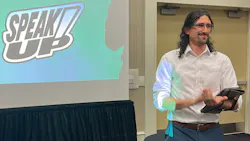
At some point in life, everyone will have to speak in public. Whether it’s at work, at a conference, or elsewhere, it’s inevitable that they’ll have an audience when talking.
Despite how common public speaking is, glossophobia—or the fear of public speaking—is the most commonly reported phobia in the United States, according to the National Social Anxiety Center reports, ranking ahead of heights, spiders, and even death.
It’s this duality—the fear that many people have and the fact that everyone has to speak in public at some point—that makes Craig O’Neill, vice president of training for Autoflow in Grand Rapids, Michigan, believe public speaking is not a niche skill for the few shop owners who get invited to industry events. It’s an essential tool in your leadership toolbox.
“The audience size can be one or 100 or 1,000 or more,” O’Neill says. “But whether that audience is one or more doesn’t matter. You’re public speaking.”
For O’Neill, that belief was formed early. He grew up around his family’s transmission shop, spending summers in the business and sitting quietly in the front office, listening as his father and the shop’s service advisor talked with customers. He did not know it at the time, but he was learning the mechanics of communication long before he ever thought about speaking professionally.
“You never realize you’re learning sometimes in the opportunities that are given to you,” he says. “You realize that later on, after you’ve gone through those things, and you look back on that.”
Now, after more than three decades in the industry, O’Neill sees communication as one of the most important gaps holding shops back. In his view, many of the problems shops wrestle with, from customer trust to employee engagement to industry stigma, trace back to the same root issue.
“I feel that the problems we face in this industry are because of our communication problems,” O’Neill says. “It’s like we’re poor ambassadors. We just never learned the diplomatic language of the community that we’re serving.”

Recognize That You Are Already Doing It
The first step for shop owners is simple: stop thinking of public speaking as something that only happens behind a podium.
O’Neill says many shop leaders already practice public speaking every day without calling it that. They lead meetings, coach employees, talk through complex repairs, handle upset customers, and explain strategy to their teams. The problem is that they do not define those interactions as public speaking, so they rarely practice or improve them with intention.
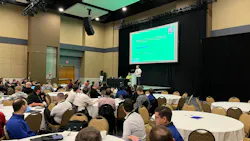
Team meetings are a perfect example. O’Neill says he routinely meets shop owners who experience the same nerves before speaking to their own staff that others feel before stepping onto a large stage.
“They’re getting the same nerves that you would expect for someone that’s about to give a massive presentation to a huge ballroom audience,” he says. “But they’re just talking to their 18 members at the shop.”
Those nerves are real. O’Neill describes the familiar physical response: elevated body temperature, visible shaking, strained breathing, sweating, and a racing heart. For many people, those symptoms can feel like proof that they are not cut out for speaking.
O’Neill sees it differently. The fear is common, but it can be managed.
“We’ve all literally, every one of us, spent time feeling the nerves and the stress when all of the attention and eyes are on you,” he says.
Shift the Focus Away From Yourself
When shop owners ask why speaking feels so uncomfortable, O’Neill’s answer is both simple and challenging: nerves often grow when the speaker becomes too self-focused.
“That anxiety comes in when we fail to be others-focused,” he says. “When we put ourselves first, we become more nervous, because it’s more about us than it is about them.”
That mindset shift matters. A shop owner who is worried about looking foolish, sounding unprepared, or being judged is naturally going to feel pressure. But a shop owner who is focused on helping the audience, whether that audience is an employee, a customer, or a room full of peers, can reframe the moment.
Even good intentions can become self-focused, O’Neill says. A speaker might tell themselves they do not want to disappoint the audience or that they want to make sure the content is valuable. That sounds others-focused on the surface, but the pressure still centers on the speaker’s performance.
“If you’re speaking about something or have been asked to speak about something, your value isn’t in question at all,” he says.
That doesn’t mean preparation is unnecessary. In fact, O’Neill says nerves can sometimes reveal a lack of preparation. Shops are often reactive, and leaders can find themselves trying to communicate from chaos. That rarely produces a clear message.
“If we aren’t prepared and, let’s face it, our industry, a lot of times we’re very, very reactive,” he says. “If we’re communicating from chaos, which is the norm, it’s very difficult to communicate effectively from that position.”
Find a Place to Practice
For O’Neill, the biggest turning point in his public speaking came through Toastmasters.
Years ago, while leading a web meeting with a three-store client, O’Neill found himself in a room with several people he wanted to impress.
So he talked. And talked.
“I wanted to impress them, and that is what I set out to do by talking nonstop,” he says. “I didn’t pause. I barely gave any room in there at all.”
Afterward, O’Neill received feedback about the call, as well as a recommendation that he attend a Toastmasters club. O’Neill took the advice and joined Grand Rapids Toastmasters Club 404, a local club that has been running for 80 years. Nearly seven years later, he is still attending.
What he found was not just a place to speak, but a place where people intentionally show up to help each other improve.
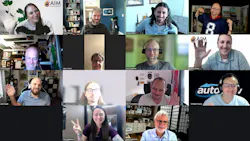
“It’s a group of people that shows up not just for themselves, although everyone is there to work on their own communication and leadership skills,” O’Neill says, “but they’re there to lend their time so that others may practice their public speaking at them, and then they give a gift of their feedback to that individual.”
That kind of structured practice is difficult to replicate inside the shop, where conversations often carry real business consequences. Toastmasters gives leaders a lower-risk environment to practice, stumble, receive feedback, and try again.
“It’s a safe place for people to come and practice their skills,” he says.
Get Better at Giving Feedback
Perhaps the most practical daily benefit of public speaking practice, O’Neill says, is learning how to give better feedback.
That is one of the most uncomfortable responsibilities shop owners have. Correcting an employee, coaching a service advisor, or addressing a recurring issue requires clarity, confidence, and empathy. Those are the exact skills public speaking practice can help develop.
“When you get good at delivering feedback, and you’ll go through if you join Toastmasters, you’ll go through a Level 1 Pathway and part of it is giving evaluations,” O’Neill says.
In Toastmasters meetings, participants evaluate each other’s speeches. At first, O’Neill says, that can feel awkward. New members may not know how to critique someone they admire or how to offer improvement suggestions in a way that feels helpful rather than harsh.
But that discomfort is the point.
“Man, that is absolutely one of the most critical skills that we have as leaders in the shop,” he says. “The best thing that I could possibly encourage, in my opinion, is get good at giving feedback.”
Start Small and Keep the Focus on Service
Shop owners do not need to become keynote speakers to become better communicators. They can start by preparing more intentionally for team meetings, practicing explanations before customer conversations, asking for feedback from trusted peers, or visiting a local Toastmasters club.
They can also read. O’Neill recommends Dale Carnegie’s “How to Win Friends and Influence People,” a book he says many people wish they had read much earlier in life. Its enduring value, he says, is its emphasis on communication that puts other people first.
That is ultimately the center of O’Neill’s message. Public speaking is not about ego, applause, or chasing a larger audience. It’s about helping people understand something that can make their work, their shop, or their life better.
“If you change one life at all or one perspective that is now healthier as a result of their interaction with you and your experience, man, good job,” O’Neill says. “That’s fantastic.”
For an industry still fighting old stigmas and daily communication challenges, that may be the most important reason for shop owners to get more comfortable speaking up.
About the Author
 Noah Brown
Noah Brown
Noah Brown is a freelance writer based in Stillwater, Minnesota. He graduated from the University of St. Thomas with a degree in journalism in 2019 an has covered the automotive aftermarket and vehicle technology sector since 2021.