Key Highlights
- Many shops are stuck in habits from decades ago, which can hinder growth and adaptation to modern customer expectations.
- Transitioning from technician to CEO requires mentorship and learning new skills in advertising, finances, and staffing to succeed.
- Rebranding the shop with a professional image and a customer-centric approach can attract better technicians and more clients.
- Adopting a 'yes' attitude and being flexible with customer needs can significantly increase car count and customer satisfaction.
- Expanding hours and greeting customers proactively enhances the customer experience and positions the shop as a retail and hospitality leader.
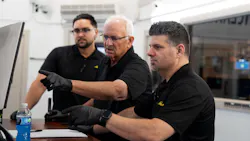
The average shop has accumulated more than three decades of experience in the industry, according to the Ratchet+Wrench Industry Survey. While that number feels impressive, it can be dangerous if your operations are still mirroring the way they ran when you began your journey.
In an industry where habits can last decades, “business as usual” often feels comfortable. But according to shop owner Bill Brusard and coach Todd Hayes, that mindset is exactly what keeps shops stuck, struggling, or slowly falling behind.

From Technician to CEO
Like 65% of the shop owners in business today, Brusard began his journey as a technician in 1988, becoming a master mechanic before branching out on his own in 1995 and eventually settling into his first shop, a three-bay gas station, in 2002.
“I was very good at fixing cars,” notes Brusard, owner of JB Auto Care in Weymouth, Massachusetts. “And I was pretty good at talking with customers, but I didn’t know what to do as far as getting more customers other than referrals, which is a slow process.”
Like many shop owners, Brusard assumed, “If I fix enough cars, I’ll get wealthy. And that wasn’t the case.”
Brusard admits he knew nothing about advertising, finances, or staffing and “peaked out pretty quickly.”
“Transitioning from technician to CEO is a tough transition,” he explains. “Someone has to mentor you to do this. It equips you with the right tools. And if you don’t learn these tools, it’s going to be business as usual, where you just kind of keep on showing up and hoping you make money rather than planning for success.”
Shops are Frozen in Time
Hayes, COO of Adams Automotive and co-founder of Auto Shop Answers, sees a similar pattern across the country.
“The vast majority of our industry is frozen in time,” he notes.
From his vantage point, Hayes says, shop owners should be operating under the notion of auto hospitality as opposed to being in the auto repair business.
“They think they’re in auto repair. They’re not,” he says of his competitors and the majority of shops across the country. “They’re in retail. They’re in hospitality.”
That misunderstanding shapes everything from hours of operation to customer experience.
“Customers need us every day of the week … yet most shops are closed when their customers are off work,” he points out. “It’s the craziest thing you’ve ever seen.”

Playing Chess
A turning point for Brusard came when he stopped trying to figure it out alone and enlisted Hayes’s assistance.
“When I first opened up, I got advice from friends, family, neighbors, but it wasn’t intelligent advice. They cared about me, but they didn’t know what they didn’t know. So, I was taking advice from my mother, my father, my sister, my neighbor, and it was not the correct information,” he explains. “And so, when I met Todd Hayes, he gave me counsel on exactly what to do next and it … collapsed time for me.”
That shift—from guessing to following a proven model—changed everything.
“Before, I was just showing up hoping I’d make money,” Brusard relates. “Now, we have a roadmap. We’re building with the end in mind.”
And the results speak for themselves. Brusard now operates 14 locations, generates millions in annual revenue, and oversees more than 300 employees.
“I was running a mom-and-pop. Now we’re running a professional organization,” he explains. “I was playing checkers before—now I’m playing chess.”
For shop owners looking to break out of “business as usual,” Hayes and Brusard offer five key strategies:
1. Have the right image.
Most agree the industry needs an image makeover. From greasy hands to dirty floors to unkempt waiting rooms, the images many associate with repair shops are less than flattering. Hayes notes it’s time to rethink why this matters.
“If you were selling your home, wouldn’t you dress that home up? You’re selling your services every day, your business every day, and it needs to look the part,” he says. “So, clean your floors, purge your shop, and make it attractive, not only to attract customers but to attract better technicians or the technicians that you want to work there.”
Brusard notes there are several steps in creating the ideal image.
“Image is a big thing,” he admits. “You have to have professionalism, people in uniforms, and a clean facility. That’s step one. Then you have to advertise to get the phone to ring. And once the phone rings, you have to say ‘yes’ to customers.”
2. Become a “yes” shop.
Brusard likens the “yes” attitude to plain old customer service—something not every shop offers—which is what sets him apart.
“We say yes to customers, which drives car count drastically,” he admits. “When a customer calls and says, ‘Is now a good time,’ even if it’s not a good time for us, we make it happen.”
He adds that small shift offers a level of care and concern that even dealerships can’t compete with.
“I have a newer vehicle and had some warranty issues, so I called the dealer and it was like a week to get my car in,” Brusard quips. “A lot can happen in that week. I can find another place to go to. My car could fix itself. I could have fixed it. Maybe I have a financial problem now and don’t have the money to get my car repaired. A lot can happen in that time gap. Time kills deals.”
So do yourself a favor and say yes right off the bat, Brusard says.

3. Listen to phone calls.
And phone skills go beyond simply taking information about the vehicle. It’s an opportunity for the shop to assure a customer they will be in good hands and well taken care of—not taken advantage of.
“Advertising does one thing and one thing only, and that’s to get the phone to ring,” Hayes notes. “But how you answer that phone determines if that customer is going to come to your shop or not.”
He encourages owners to listen to calls to make sure those who make the initial interactions with customers are answering the phone with a smile, talking with passion—not pressure, and building a solid foundation for a lasting relationship.
Next, he says, feed those conversations into artificial intelligence to evaluate where improvements are needed.
“Start listening to phone calls and go, ‘Oh my (gosh), that hurt. Wait, this customer called, wanted service, and we said no. Why?’”
4. Walk out and greet your customers.
While many advocate for eye contact and greeting customers as they enter the waiting room, Hayes encourages meeting them at the door—or even in the parking lot.
“Do a strong meet and greet at the car,” he insists. “That means walk out and meet your customer and go, ‘Hi, I’m Todd Hayes. Thank you so much for being here. How can I serve you?’”
He adds that giving each customer a shop tour and introducing them to the team members they will be working with also should be standard protocol.
“You walk into a lot of these shops, and they have signs plastered on the wall saying, ‘Do not come in. It’s against insurance,’ which is (nonsense),” he says.
Instead, he says, use the opportunity to begin walking them through the benefits of doing business with you, beginning with attention to details.
“We walk them into the shop and introduce them to the technicians and to … service advisors,” he explains. “And then everybody’s happy they’re there.”
5. Forget the five-day work week.
Hayes and Brusard agree if you’re going to be in the hospitality business, you have to keep hours like a retail business.
“We’re doing the industry and our customers a disservice being closed on Saturdays,” Brusard asserts. “We’re open on Sundays. I know that it’s taboo, but if you own a restaurant, would you only be open five days a week? We have a retailer’s mentality.”
Hayes chimes in that shops should be poised to serve their customers during times that are convenient for them. After all, he points out, they are the ones paying your bills and should be treated like royalty.
“Everything your family does, every vacation, every time you put gas in your car, every time you go out to dinner, a customer paid for that, not the shop,” he notes. “Without customers, you go out of business.”
About the Author
 Christine Schaffran
 Christine Schaffran
Editor-in-Chief
Christine Schaffran is the Editor-in-Chief for Ratchet+Wrench magazine at Endeavor B2B. She is an award-winning journalist, having covered both commercial and industry magazines and newspapers during her career. She previously served as Editor-in-Chief for another publisher for 17 years prior to joining Endeavor. When she's not spending time with her husband and son, you'll find her in the kitchen experimenting with new recipes and delicious dishes to try.
Don't miss Christine Schaffran's next article. Sign up for Ratchet+Wrench's Insider and This Month in Ratchet+Wrench's newsletters.