Key Highlights
- The new inspection process increased repair orders by 33% by focusing on professionalism and consistency.
- Regular team meetings and feedback fostered buy-in and improved communication between technicians and service advisors.
- Standardized templates and final verification photos helped eliminate mistakes and build customer trust.
- Parallel inspections between junior and experienced technicians serve as effective training and quality assurance tools.
- Customizing inspection templates to fit each shop’s environment ensures better adoption and results.
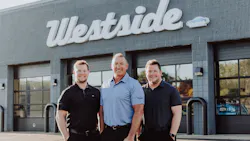
About six years ago, Jon and Derek Kloosterman of Westside Auto Group realized that their current inspection process wasn’t cutting it. Not only were the brothers unhappy with their inspections, but their technicians and service writers were having to work harder than they should. To solve the issue, they worked with their team and linked up with Shop-Ware to create an entirely new inspection process. The result was an impressive 33% jump in their average repair order. From camera tips to the philosophy that makes it work, here’s the breakdown of an effective DVI.
Backstory
With roughly 40 technicians with a variety of experience and ages, it was critical for the Kloostermans to create a process that made sense to the people performing the inspections. Creating an easily understandable template means fewer skipped sections and more consistent results.
Problem
The previous inspection template took too long and frequently had missing sections.
“The biggest thing is maintaining professionalism,” Derek explains. “We are working to build trust with clients, so we hold ourselves to high standards regarding professionalism and work quality.”
A bored, uninterested voice erodes customer trust and loyalty just as much as one speeding through the inspection. There’s also the issue of verbiage—the language used in an inspection matters. Calling a customer’s vehicle “old” or simply describing an issue as “bad” paints an incomplete picture that can negatively impact a customer’s perspective and harm the average repair order.
Solution
Two things were essential to the successful implementation of the new inspection process: Shop-Ware and feedback from the technicians and service advisors.
“Clear communication with your team is essential,” Derek says. “We hold monthly in-person leadership meetings with all of our shop foremen and service directors. Emphasizing the ‘why’ behind inspections has created strong buy-in across all our locations.”
“Pairing service directors and shop foremen in those meetings was a game-changer,” Jon explains. “Foremen are responsible for inspection quality, while service directors handle estimates. Bringing them together eliminated friction between the front and back of the shop.”
Building Consistency
The standardized nature of DVIs can make them seem like a hassle to newer technicians, leading them to skip steps or even inspections entirely if a vehicle has recently been in the shop. Inspections don’t need to be exciting, but they shouldn’t be treated as a hassle or rushed.
“For owners struggling with consistency among younger techs, try running parallel inspections: have a junior tech perform an inspection, then have an experienced tech inspect the same vehicle. Comparing the results creates an immediate, constructive teaching moment to bridge skill gaps,” Jon says.
Aftermath
For Westside Auto Group, every inspection ends with a final verification shot. An oil change gets a final shot of the oil cap being tightened at the very end; more serious repairs may get a full walk-around or four corner shots to verify the vehicle’s condition. Not only does this help eliminate the common minor mistakes like leaving a 10 mm socket somewhere it shouldn’t be, but it helps build customer trust by giving them final proof of a quality job.
“Generally, success looks like consistency across the board,” Jon says. “Every one of our seven locations has the exact same inspection across the board. Not only from a location standpoint, but from technician to technician, we try to keep the verbiage accurate and consistent, as well as the areas where photos are taken, so that we create a uniform experience for our clients. We want them to know what to expect when they come into our building.”
Takeaway
Every shop’s needs are different, so every inspection template will need to be uniquely tuned to the shop’s environment. Ultimately, it isn’t a specific number of steps or order of operations—it’s whatever makes the most sense for the technicians doing the inspections.
It’s also important to remember that the goal of an inspection isn’t to raise the ARO or highlight sales opportunities. It’s a tool for providing better customer service.
“All of these tools—the digital inspections, the point-of-sale programs, the AI—they are tools. They are not a salesman,” Jon concludes. “At the end of the day, they are a tool to help guide through, but the communication from the advisors is still the most important key.”
Even the most thorough video inspection is useless if no one watches it. By creating an effective inspection template, you can build customer trust, reduce customer wait times, increase your ARO, and even alleviate technician workload.

Pro Tip: Know When to Pick Up the Phone
There will be issues that are simply too complex or serious to fully explain in an inspection. While video evidence of the problem is important, some situations call for a direct conversation with the customer after the video is recorded. Service advisors are typically best equipped to handle these conversations because they can tailor the explanation to the customer.
“Filtering through the service team is extremely important because our service team knows our clientele in and out very well,” Derek Kloosterman says. “One client might be a lot more technical and want some of that more in-depth information, and others just might want it simply explained to them.”
Say This, Not That
The words technicians use during a digital vehicle inspection can shape how customers understand a problem—and whether they feel confident approving the recommended repair. Instead of relying on vague descriptions, use specific language and show customers exactly what you found.
|
What Not to Say |
What to Say Instead |
|
“These struts look old.” |
“Struts are original on vehicle with 150,000 miles.” |
|
“Transmission is bad.” |
“After completing our fluid test and scan, we found ...” |
|
“The axle is shot.” |
“Here is the tear in the rubber boot, and you can see grease actively leaking out.” |
|
“Needs new seal.” |
“Here and here are cracks that have formed in the rubber.” |
Three Tips for Better DVI Videos
A good DVI does more than document a problem—it helps the customer understand what the technician sees and why the recommended repair is necessary. A few simple recording techniques can make the difference between a video that gets watched and one that gets ignored.
- Keep it clean, clear and concise. The tablet or recording device’s lens should be clean, the lighting should be appropriate, and the message should be clear and understandable. Keep videos brief and, when possible, record during a pause in shop noise.
- Give customers the full picture. It’s easy to forget that the customer has no context for what they’re seeing. Start with a wide shot that includes the necessary context, then move closer to specifically show the problem. If there’s a crack in the tire tread, for example, start with a full shot of the wheel well before closing in on the issue. When applicable, use a tool such as digital calipers or a tire tread depth gauge to further illustrate the point.
“Most clients will never see grease on the ground in their garage. But the minute you show them an axle boot that has got grease flung everywhere underneath that vehicle, that’s a pretty night-and-day opportunity,” Jon Kloosterman says. “Our axle approval rating skyrocketed because of it.” - Explain how you reached the conclusion. Don’t simply identify the problem. Outline the testing procedures and diagnostic steps that led to the conclusion. Walking customers through the process builds credibility and helps them understand why a repair is recommended.
“Techs need to outline their testing procedures and clearly explain how they reached a conclusion. It’s easy to just say ‘transmission bad,’ but walking through the steps and diagnostic tests performed builds credibility. Our shop foremen train the shops on this standard,” Derek Kloosterman says.
About the Author
 Griffin Matis
Griffin Matis
A graduate of the University of Missouri School of Journalism, Griffin Matis writes for Ratchet+Wrench magazine. Previously, he wrote and edited digital content relating to health, entertainment, pop culture, and breaking news.