How Tiered DVIs Create Value for Technicians, Customers, and the Shop
Key Highlights
- Implementing tiered DVIs based on vehicle age and mileage improves workflow efficiency and customer experience.
- Focusing on technician input and clear communication helps align internal processes with customer expectations.
- Reducing inspection times and customizing reports increases repair approval rates and customer retention.
- Shifting technician mindset from repair-focused to customer advocacy enhances overall service quality.
- Consistent communication about delays and process changes builds trust and transparency with customers.
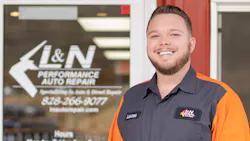
Digital vehicle inspections offer customers a clear, easy-to-understand picture of their vehicle’s health and needs. Since implementing a tiered approach to DVIs at L&N Performance Auto Repair, owner and operator Lucas Underwood has seen a consistent increase in both technician efficiency and satisfaction, as well as a spike in customer retention.
Backstory
In the beginning, a DVI had to be manually built for each specific use case. Like many owners, Underwood initially built his basic inspection list based on what he, as a technician, would want inspected on his own vehicle. While well-intentioned, the inspection list became a massive, one-size-fits-all obstacle for both technicians and customers. The average repair order ran around an impressive $1,700, thanks to the expansive inspection list, but it caused frustration across the shop.
Problem
The inspection process had become more of a burden than a way to work efficiently. Tasks weren't in an ideal order, requiring extra work from the technicians. Technicians were more likely to skip or ignore sections that weren’t relevant to the work they were doing, resulting in inconsistent reports. Customers, meanwhile, spent up to four hours at the shop for what should have been a 90-minute inspection, which further reduced repair approval rates and return frequency.
Solution
Once Underwood took a step back and started working with his technicians, things began to fall into place. Even small changes—such as checking tire pressure in the bay instead of the parking lot to eliminate an extra trip—added up to significant improvements in a frequently frustrating process.
“One big thing I try to caution shops against when talking to them about this is: don’t build it around what you think it should look like,” Underwood says. “Build it around the workflow itself. Build it around how they’re working on the car and what they’re doing with the car at any given time.”
Underwood implemented three tiers of inspection based on the technicians' workflow. For cars with fewer than 50,000 miles, those that are under two years old, or those that have recently visited the shop, L&N performs a light inspection designed to catch critical oversight risks while getting customers in and out promptly. For vehicles that haven't been in the shop for six to 12 months, have more than 50,000 miles, or are more than three years old, L&N performs a more advanced inspection that provides a comprehensive evaluation of the vehicle's overall health. Finally, L&N offers paid, comprehensive inspections for customers who request them.
Within each inspection are four phases:
- Phase 1: Bay entry—Road test evaluation and moving the vehicle into the bay.
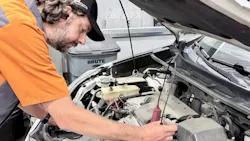
- Phase 2: Under the hood—Opening the hood and checking fluids.
- Phase 3: Mid-level lift—Raising the vehicle on a lift to mid-level for middle-tier inspections.
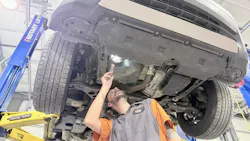
- Phase 4: Full-height lift—Raising the vehicle all the way to evaluate undercarriage components.
Aftermath
While L&N’s ARO dropped by roughly $300 on newer vehicles, return visit frequency for those vehicles doubled from once a year up to twice annually, turning a minor drop in initial ticket size into a net gain in customer lifetime value. The reduced wait times improved customer satisfaction and increased approval rates for repairs.
Ultimately, technicians accomplished more with less friction and frustration. More importantly, the new process helped shift their mindset from "I'm fixing a broken vehicle" to "I'm a customer advocate." As Underwood made clear to both his customers and his employees, the new system was built entirely on helping technicians and customers make the best decisions, not running up the ARO.
Underwood also notes that the technician shortage is still a serious issue facing the industry. Even when their compensation meets or exceeds their financial needs, technicians are still leaving high-paying shops. Money isn’t the only retention tool; offering employees a purpose and a paycheck will go much farther than a paycheck alone.
“Tim Kite, an amazing leadership coach who passed away a couple of years ago, once said that when you hire people, they want to go on a journey. They don’t just want a job,” Underwood explains. “When they come to work, it shouldn’t just be about fixing cars; they need to know they’re accomplishing something meaningful that impacts others. If we tie that back to being an advocate for the consumer—who could be your mom or your child—your job takes on far more importance than simply turning a wrench.”
Takeaway
For a shop that wants to implement tiered DVIs, there are two things that need to be managed: internal expectations among technicians and external expectations for customers. Fortunately, both have the same solution: communication.
Internally, it requires full engagement with your team. If you aren’t asking them directly how you can make their workflow more logical or more effective, you’ll never establish that buy-in from them. Externally, it requires establishing why you’re doing this and how it benefits customers, like telling a customer with a newer vehicle that their wait time will be reduced thanks to a shorter and more targeted inspection list.
Of course, unexpected things will always happen. A minor issue can turn into a major emergency at the drop of a hat, so the best move is always communication. Even if it turns out that a part will take a week to arrive, updating the customer the same afternoon they dropped off their car establishes trust and transparency.
“We have to balance internal expectations, and we have to balance external expectations,” Underwood explains. “And if I’m talking to them about why I’m doing this, my desired outcome, and I’m obtaining buy-in from both parties, that’s how I get a successful process change.”
About the Author
 Griffin Matis
Griffin Matis
A graduate of the University of Missouri School of Journalism, Griffin Matis writes for Ratchet+Wrench magazine. Previously, he wrote and edited digital content relating to health, entertainment, pop culture, and breaking news.