More Than Margins: Why Tire Sales Are Critical for Today’s Auto Shop
Key Highlights
- Building strong relationships with local tire suppliers enables shops to access quick deliveries without heavy inventory costs.
- Focusing on customer needs and clear communication simplifies tire sales, making them more straightforward and trustworthy.
- Integrating tire sales with other services fosters total car care, increasing customer retention and overall shop profitability.
- Profitability is better measured by gross profit per hour rather than markup percentage, highlighting the efficiency of tire services.
- Shop owners should take proactive steps like partnering with suppliers, selecting core tire offerings, and setting strategic goals to succeed.
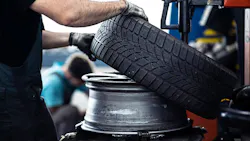
For decades, independent shop owners operated on the belief that stocking and selling tires meant sacrificing valuable real estate for marginal-at-best profits. The reality for a modern repair shop is starkly different. Anders Gustafson, co-founder of ShopLevers, explains why modern auto shops need to change their mindset about strategic tire sales and how keeping tire sales in-house reinforces both customer loyalty and long-term profitability.
As told to Griffin Matis
There are two kinds of concerns that stop most shop owners from selling tires: “I’m not going to make any money,” and “It’s going to be a big logistical nightmare because I need a massive inventory to serve my customers.” As a result, many owners decide it just doesn’t seem worth it.
The simple solution is understanding the reality that, nowadays, very few shops are stocking a significant number of tires. People often assume high-volume tire vendors succeed because they somehow have all of this stock covered, but the actual high-volume players have mostly transitioned to hot-shot deliveries. They build better relationships with a handful of local suppliers so they can get at least a couple of deliveries per day to cover their specific tire needs.
You have to stop thinking about the old ways and open your eyes to the new possibilities. You need a strong supplier relationship. It won’t work unless you know who the distributors are in your area, what their delivery schedules look like, and have a plan to utilize at least a couple of them.
To reframe it, you aren’t trying to become a dedicated tire distributor, but you also shouldn’t say “no” to tires. It’s about taking advantage of the opportunity for the right customers and the right vehicles, selling a volume that makes sense for your business model. Even selling dozens or hundreds of tires can absolutely transform your business. You don’t have to be a dedicated tire shop to make tires a successful part of your business.

The Starting Point
The first step is nailing down where you’re going to source your tires. As independent shop owners, we pride ourselves on taking great care of our customers. We don’t want to disappoint them or deliver what feels like a subpar experience because we’re trying to sell tires for the first time. Unless you know exactly where you’re getting your tires, when they’ll arrive, and what brand tiers you want to offer, you won’t meet the high customer service standards you hold yourself to. That needs to be dialed in first.
The second hurdle where we see owners run into trouble is the psychological impact on sales figures. Adding a set of tires can easily double your average sales quote. Suddenly, you have service advisors—who are constantly coached to improve their close rates and average repair orders—hesitating because they feel like doubling the quote will scare the customer off.
You have to get them to stop focusing on the big number and instead leverage one of the best aspects of selling tires: it is the single most easily understood product we offer. Customers understand what tires are. They know when they are worn down or bald. Communicating a tire replacement is an incredibly straightforward presentation compared to trying to explain control arms, ball joints, or complex suspension issues.
So, I tell advisors, “Look, forget about the price tag for a second. Focus entirely on what the vehicle needs. From a trust and honesty standpoint, lean into the fact that the customer already understands this product.” If you show them a digital vehicle inspection photo of a bald tire, they’re going to agree with you. That actually builds trust and makes for a much easier sales process than a highly technical, misunderstood repair item.
In terms of getting advisors on board, they need to realize those tires are going to be sold—so why not by you? Look at it from two other angles:
First, the customer often just wants the convenience of getting everything done today. They’ve already taken the time to drop off their vehicle and make alternative arrangements. They don’t want to spend another day at a separate tire shop if they don’t have to.
Second—without ever resorting to scare tactics, but looking at it from a pure business preservation standpoint—you want to protect the exclusive relationship you have with a customer, which means taking care of all their automotive needs. From a technician’s point of view: “I don’t want anyone else working on my customer’s cars.”
The Complete Package
We see this everywhere in the industry right now with the shift toward “total car care.” Major chains are converging in the middle: quick-lube shops are doing brakes, and tire shops are doing general repair. It makes perfect business sense for the shop, and it makes complete sense for the consumer. Why should they go to three different shops? If you let your customer go down the street for tires, you run the risk of that competitor earning their trust and winning their general repair business as well.
To address the profitability misconception: the markup on the physical tire is admittedly lower than what you’d see on brake pads or suspension parts. But the most progressive shop owners in the industry don’t look at markup percentage as the only metric for success. They look at gross profit per hour. How many dollars of gross profit are you bringing in relative to the rack time?
From that angle, tires are incredibly lucrative because the service is fast and straightforward. Plus, it’s not just the tire itself—you have installation, alignments, and road hazard insurance. When you package all of that together, the total profit opportunity is substantial—and you can turn the car around in an hour to an hour and a half.
Getting the Ball Rolling
Leverage your network. Peer groups and industry networks are full of progressive shop owners who have already solved this puzzle. Reach out to them, attend training, and educate yourself.
Beyond that, treat it like any other entrepreneurial initiative: take concrete first steps. Partner with a supplier, select your core tire offerings, and establish a clear pricing strategy. Don’t just wait around hoping that when a tire opportunity walks in, everything will magically fall into place. You need a strategy. Set manageable goals, track your progress, and keep leveling up.
Anders Gustafson is co-founder of ShopLevers, where he brings financial operations expertise to independent shops. A former finance professional turned shop owner and operator, he combines deep automotive-industry knowledge with a CFO’s command of the numbers. Today, he helps repair shops build financial clarity and operational discipline, giving owners the visibility and leverage they need to run profitably, make sharper decisions, and grow their businesses with confidence.
About the Author
 Griffin Matis
Griffin Matis
A graduate of the University of Missouri School of Journalism, Griffin Matis writes for Ratchet+Wrench magazine. Previously, he wrote and edited digital content relating to health, entertainment, pop culture, and breaking news.