Second Chances Garage: Transforming Lives Through Automotive Skill Development
Key Highlights
- The program trains high school juniors and seniors in complex automotive repairs, accelerating their skill development through real-world experience.
- Second Chances Garage has placed over 425 cars with individuals in need, significantly improving their access to reliable transportation.
- Apprentices learn not only technical skills but also the importance of community service and the impact of dependable transportation on daily life.
- The nonprofit partners with local organizations to identify eligible recipients, ensuring cars are safe and suitable for long-term use.
- Funding and support come from grants, donations, and partnerships with local businesses like SUNEX Tools, which provides tools and resources for apprentices.
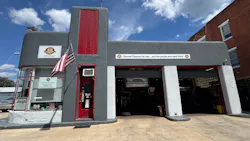
At Second Chances Garage, Inc., youth apprentices don’t stay in their comfort zone for long.
Many cars that come into the nonprofit, which refurbishes donated vehicles and offers reduced-cost repairs for low-income working adults, are more than 20 years old and/or have passed the 200,000-mile mark. Even some of the newer models need major fixes.
The two full-time technicians at the shop in Frederick, Maryland, bring students into complex jobs early, supervising them well beyond basic tasks such as oil changes, battery replacements, and tire rotations.
“Right now, I’m looking at an apprentice literally pulling a camshaft out of a car,” said Joe Hall, a Second Chances technician since 2017. “They are constantly challenged, which I think helps them move up in skill level and advance a lot faster.”
Second Chances aims to train three apprentices each year, most of them high school juniors and seniors. Along with hands-on experience, they gain true awareness of how dependable transportation can change lives, says Tonya Hatosy-Stier, executive director of Second Chances.
“Younger team members often want to feel like their work matters,” Hatosy-Stier notes. “Here, they see firsthand that reliable car is the difference for getting to work consistently, taking kids to school, making medical appointments, accessing food. That connection between skill and impact is something you can’t always teach in a traditional shop setting.”
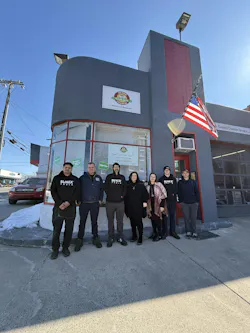
An Intentional Process
Building a pipeline of new technicians in the automotive industry is a central piece of the mission at Second Chances, a blend of a community service project, skilled trade center, and workforce development program.
The 501(c)(3) nonprofit was founded in 2010 by Rick Trawick, an engineer and car enthusiast, and his wife, Cindy Trawick. Their effort began with fixing up one car for a neighbor in need and has grown into a shop with four bays and six full-time employees.
Second Chances’ staff technicians are paid a salary rather than working in a flat-rate or hourly system, with mentorship of apprentices an expected part of their duties. At times, they partner with other area auto shops on more complex jobs.
“It never feels like a rat race,” says Hall, who has 13 years of experience plus grew up with a father who did body work for a living. “It’s not about diagnosing problems as quickly as humanly possible to make money. There’s a bigger picture.”
Over the past 16 years, Second Chances has placed more than 425 cars with working individuals, military veterans, and families who can’t afford to buy a vehicle with their paychecks and usually have to rely on public transportation.
In addition, 10,000-plus clients have qualified for affordable repair work at the shop, where prices often are about half the cost of full-service garages. Many report that they can afford gas and car insurance but not scheduled maintenance or repairs.
Second Chances works with people directly referred by a variety of local organizations, such as nonprofits, social services agencies, health departments, public housing authorities, and churches. They include young adults juggling jobs and school, single parents, military veterans, people experiencing homelessness, and former addicts in recovery.
Partner agencies verify that each candidate has met income criteria, has no current or pending criminal charges, and, if they are applying for the vehicle placement program, is stable and prepared enough to handle the responsibility of owning and caring for a car.
Instead of giving vehicles away, Second Chances charges a $590 purchase fee and provides access to a low-cost service plan. “Everyone has some skin in the game—an immediate sense of ownership,” Hatosy-Stier explains. “It’s a very intentional process.”
The nonprofit receives roughly 380 donated vehicles a year, although typically only about 45 of those turn out to be safe and cost-effective candidates for placement. Some cars are not even running before they are towed into the shop.
“We happily take all types, but we have to triage carefully,” Hatosy-Stier says. “We don’t want someone to get a car that dies in a matter of months. We choose cars that have enough life in them to set people up for success for the next three to five years.”
The remaining donations, all tax-deductible, still fuel the mission via retail sales, wholesale markets, recycling or parts donations, she continues: “Every vehicle has a role. Either it becomes reliable transportation for a neighbor or helps fund the next road-ready car.”
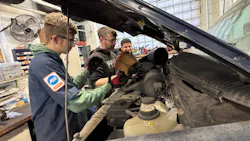
In Service to the Community
Auto tech apprentices come from Frederick County Public Schools and the Frederick County Career & Technology Center (CTC), which serves students in grades 10 to 12, with grant support from Frederick County Workforce Services.
SUNEX Tools also helps fund the program and gives a box of tools worth $2,500 to $3,000 to apprentices who complete their 450 hours of required training.
“It’s a perfect way to show them we’re proud of them, as well as to support the CTC mission of getting students ready for their first job,” Hatosy-Stier says.
Most apprentices land a shop position quickly. Hall’s fellow full-time technician at Second Chances, meanwhile, is Lester Gonzalez, who joined the garage as a Youth Apprentice in 2021 and was hired as a staff member shortly after graduating.
Apprentices often witness the emotional transfer of vehicles to recipients, when Hall or Gonzalez offer the new owners an overview of their car’s parts and walk them through basic tasks such as changing oil and checking fluid levels.
“People are grateful, but they can also be overwhelmed,” Hall says. “We just try to support them and make a difference in the community.”
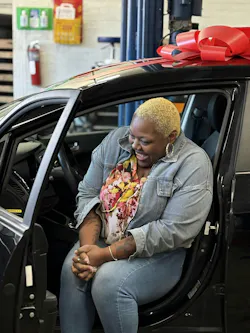
Changing Lives for the Better
Asked to share recipient stories, Hatosy-Stier offers two. One was an 18-year-old high school student who was homeless and working two jobs. However, he could only reach certain workplaces on public transportation and couldn’t take shifts when a bus wasn’t running.
With a Second Chances car, the young man drove to a grocery store 15 miles from his couch-surfing spot, where he landed a job that paid $10 more an hour. He was able to work fewer hours and schedule shifts around classes to graduate from high school.
“He has his own place now and is in college,” Hatosy-Stier shares. “It’s like a domino effect when transportation barriers are unlocked.”
Another memorable recipient was a single mother of two who also had been homeless. Without her own vehicle, grocery store visits sometimes ate up several hours of her day, and she couldn’t buy more food and milk than she could carry on a bus.
“When she got a car, she kept thanking us because she actually had time to take her kids to the park,” Hatosy-Stier recalls. “It wasn’t just about the money—it was about being a better parent and having time for things that brought her joy.”
Moving forward, the nonprofit’s Board of Directors—leaders in diverse areas such as education, finance, law, fund development, business management, and advocacy—hope to continue expanding its rehabilitation, repair, and apprenticeship programs. In fact, the board is actively looking for a new location with room for six bays and more office space.
“Our team is passionate about serving both our community and the automotive industry,” Hatosy-Stier says. “If you have a reliable vehicle, you often don’t even think about how important it is. You take it for granted. We want more people to have that privilege.”
About the Author
 Alison Johnson
Alison Johnson
Alison Johnson has worked in print media for more than 30 years, including newspapers and magazines, and specializes in biographical profiles and business and medical features. She lives with her husband and two sons in Yorktown, Virginia, and has enjoyed learning more about the automotive industry by writing for Ratchet+Wrench.