From Rebranding to Expansion: How Legacy Tire & Auto Repair Is Shaping Its Future
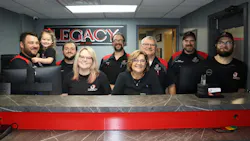
Legacy Tire & Auto Repair isn’t just a name. It means everything to owner Richard Rogenski, who runs the shop with his wife, Mary, his son and shop manager, Brian, and his daughter-in-law, Colleen. The Rogenskis’ previous shop was a family business with 45 years of history, but after a family business conflict, they ultimately decided to start their own shop under a new name and create a whole new legacy.
“We as a group were the same great people with the same great service,” Richard says. “However, we changed all of our colors on the building, and we changed a lot of things about the way we did business. We became more friendly, more open with the customers. We became less centered on the profits that were being made. We became more customer-friendly, and our customers actually became our friends and family.”
Starting From One
The first challenge was revamping the new location so that they could offer the best service possible. Determining the most important and time-sensitive upgrades was a simple matter of delegation. Richard put his full trust in Brian as shop manager and had him spearhead the renovations. Brian effectively overhauled the facilities, bringing Legacy up to speed for digital inspections, programming, and flushing services, as well as springing for new scan tools and upgraded WiFi.
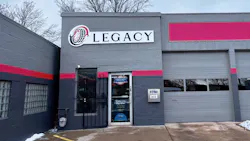
“He would just ask me, ‘What do you think about this?’ and I just told him, ‘If we need it, do it,’” Richard recalls.
Although Richard had built years of goodwill and relationships at the previous shop, Legacy was still new to a lot of people. The Rogenskis focused on building the community’s trust in the shop, one vehicle at a time.
Finding New Opportunities
Even with a serious marketing budget, it can be difficult to introduce people to a new product, let alone a whole new brand. Despite Richard and Brian’s technical knowledge, figuring out how to market Legacy proved to be a problem until Colleen, a trained nurse with no experience in marketing or social media management, stepped in. She started working with Richard to share blogs he’d written for customers on social media. The transparent and informative posts helped her build a dedicated following on Facebook, and before long, Legacy began to translate to trust in more ways than one.
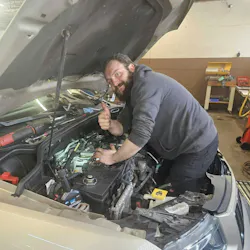
“One company we picked up had a vehicle at the dealer,” Richard explains. “They were told that the engine needed to be replaced, and it would cost them something in the neighborhood of $16,000. Brian serviced the vehicle and determined that it didn't need the engine replaced. It needed a valve job, and mostly it was just carboned-up valves. After he did that, that vehicle ran like brand new. So they saved a lot of money, and we gained their trust by being honest.”
Legacy also shifted away from an emphasis on car count and instead focused on improving customer service. Despite the decreased number of vehicles coming in and out of the shop, the sales numbers actually improved week after week. The trust-building and marketing efforts paid off as well; the relationships snowballed into contracts and a lot of potential business.
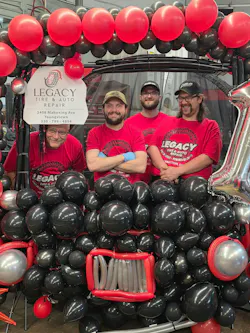
“The one thing we concentrate on now is the ARO, so we're actually doing fewer cars,” Richard says. “Another thing that really helped was fleets. We service the Alta Head Start buses. We do buses for Easterseals. We have electrical contractors, roofers, plumbers ... that’s been a substantial boom for us. And we became a Goodyear dealer so that we are able to sell to the municipalities and the state.”
Thanks to Brian’s efforts, Legacy was fully equipped to handle those requests when they came in, but the Legacy team is working on purchasing an adjacent lot to further expand their services. The expansion would allow the team to install commercial vehicle lifts and start performing ADAS calibrations, solidifying another source of revenue for the future.
A Better Place to Work
The emphasis on looking beyond immediate profit also applies to the rest of the shop. It extends to even simple things, like moving to a paid lunch instead of making employees clock out and back in.
“We don't require the team members to clock out for lunch because so many times, they'll be working on a car with a sandwich in one hand and a wrench in the other,” Richard says. “So, if they sit down and eat or stand up by the car and eat, they get paid the same.”
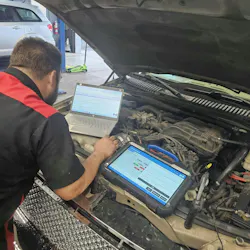
One of the other changes the Rogenskis implemented was adding Training Wednesdays to every week. Given the fact that technicians are already working hard during the day, having to go to an evening class or drive to a testing facility can quickly cause burnout.
“On Training Wednesdays, the techs have one to two hours of CTI training. We've been doing this a lot, and I'm already starting to see improvement,” Richard says. “They go in the break room, they sit there and do their training, pass their test, print out their certificate, and they're not interrupted while they're training.”
The Power of Internal Rebranding
A shop rebrand doesn’t necessarily have to be as comprehensive as Legacy’s. It can be as simple as starting with a self-evaluation.
“Look inside: Are you really treating people the way you want to be treated? Are you greeting them with a smile? Are you showing them empathy? Because a lot of these invoices can get quite high,” Richard explains.

“Show them that empathy and be transparent with them. We explain what we're doing and why we're doing it, and if they can't get all the repairs done, we're going to address safety issues first, and then prioritize everything from there.”
The same lesson can be applied to the shop itself. Workplace culture comes from the top, and empathy and transparency are just as key when dealing with employees as they are when interacting with customers. Building that sort of culture keeps everyone in the shop on the same page and pursuing the same goal.
“Everyone here is focused on the customer,” Richard says. “It starts with our service manager when he walks in the front door. The man always has a smile on his face, and he's always looking for the customer's best interest—not to just connect to make an upsell, but to actually make improvements.”
About the Author
 Griffin Matis
Griffin Matis
A graduate of the University of Missouri School of Journalism, Griffin Matis writes for Ratchet+Wrench magazine. Previously, he wrote and edited digital content relating to health, entertainment, pop culture, and breaking news.