Lessons in Leadership: Miguel Rosario’s Path to Growing a Community-Focused Auto Business
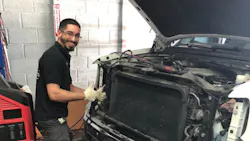
For his first few years in a shop, Miguel Rosario mostly found himself learning exactly what not to do. Although he hadn't received any guidance since joining a local shop in New Jersey fresh out of high school, he never stopped trying his best to keep the shop running and customers happy. Passion can’t pay the bills, however, no matter how hard Rosario tried. Unsurprisingly, the shop ended up shutting down and getting sold off to a car wash company.
“Even if I didn't know what I was doing, I would do my own research and figure it out on my own,” Rosario says. “I didn’t have anyone to rely on or cross ideas with when it came to repairing or diagnosing cars. I was a one-man show.”
The new owners approached Rosario to join the team, but he declined to focus on his dream: opening up a shop of his own. As the only friendly face at the old shop, he’d built up a customer base that trusted his work. He already had his eye on a vacant building that he used to pass back in high school, and by November 2013, he and his wife, Kristina Fasulo, got the keys and opened Pburg Auto Service.
Growing Too Fast
Dealing with the numbers—gross profit, parts margins, logistics costs, and so on—is unsurprisingly one of the biggest hurdles for new shop owners to face, especially as a technician-turned-owner. All of the passion and knowledge an owner may have related to customer service, automotive repair, and the community can’t change the numbers at the end of the day. Rosario and Fasulo had no choice but to learn some of those lessons the hard way.
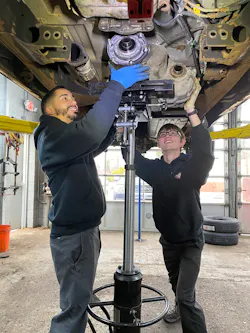
“I was only 23 and didn't understand the numbers or the business side,” Rosario says. “We knew how to fix cars and bring money in, but we didn't understand profit margins or sales tax. It was a big challenge and included some real growing pains.”
The biggest pain came in 2018, when the duo decided to try expanding with another shop in a nearby town. When they realized that they had pushed too far, too quickly, they shut it down and reevaluated their plans. Despite the lost capital, it served as a valuable lesson in risk that continues to shape the way the team does business.
“I believe the client comes first, but to service them properly and take care of our team, the numbers have to make sense,” Rosario says. “If that doesn't work, owners get discouraged and sidetracked, and then the culture suffers for everyone.”
The Most Valuable Lessons
The P-Burg team may have struggled initially, but they never stopped learning. In his early years as a technician, Rosario struggled to adapt to the rigid testing format and nearly failed out of his program despite having all of the technical knowledge required. Now a seasoned technician and shop owner, he's made it his mission to ensure that the next generation of technicians doesn’t have to face the difficult and lonely introduction to the industry he did.
“People talk about a technician shortage, but I think a lot of technicians just get burned out by bad environments,” Rosario says. “You need a good work-life balance and to treat employees like family. I want to be the mentor I didn't have when I was starting out.”
One of the most critical parts of being an effective mentor is leading by example, which means consistently learning, no matter how experienced you are, and expecting the same of everyone on the team.
“I’m all about training and leadership now. In the last few years, we’ve heavily incorporated training for our service advisors, technicians, and even myself and Kristina,” Rosario says. “I’ve also done a lot of self-education through Facebook shop owner groups, magazines, and broadcasts. Now, I want to pass that along to my employees. We’ve been hammering that down, and both of my service advisors just returned from the Master Elite Service Advisor training in Atlanta.”
“Miguel doesn't gatekeep anything,” Fasulo adds. “He is very transparent about technical and business matters so the whole team feels in tune with the operation.”
Learning to Delegate
Of course, the whole point of building a team is to hand off some responsibilities to a person you trust, which is easier said than done for someone chasing their dream. While building up that trust with his employees, Rosario learned about the value of controlled failure—stepping back and giving his staff the autonomy to make non-critical mistakes so they could grow from the situation.
“That was a very hard process, and honestly, I’m still getting better at it,” Rosario says. “I wanted to make sure everything was done perfectly for the customers. Through coaching and reading, I’ve learned to let go. I used to be called a micromanager, but writing SOPs has helped me delegate.”
The shift paid off. Embracing SOPs enabled Rosario to actually step out of the bay. He’s started taking every Wednesday off to work solely on the business itself from home, leaving the shop in the hands of his employees.
Taking the Next Steps
The end result of putting all of these pieces together is a team that cares just as much as the owners about doing the right thing. For Pburg, that means the entire team turns out for their community, whether that means litter cleanup days, preparing supplies for victims of a neighborhood-destroying sinkhole, or simply making sure the local youth sports teams have new uniforms and equipment.
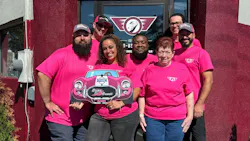
These sorts of community events also help build the relationships necessary to grow. For Rosario, it’s translated to fleet service for the local school district, visits from local politicians, and countless referrals.
Despite his rocky start with the industry, Rosario’s dream has now transformed into helping others pursue their dreams, now that he’s made his own come true. Although the current space is limited, Pburg Auto Repair's future will involve a training-focused expansion down the road—when the risk makes the most sense, of course.
“If it’s your dream, you have to chase it and not give up,” Rosario says. “I’m a technician by trade, not a business person, so my biggest advice is to get business help from a coach or a colleague. There will be struggles and heartbreaks, but the light at the end of the tunnel is bigger than anything you can imagine."