Silverstein: The View in the Rearview: Why the Hardest Nut to Crack is You

I’ve spent five decades under hoods, behind counters, and in most facets of this industry from a line tech at Sears to parts sales and owner/operator of my own shop. I’ve seen shops that look like hospital operating rooms and others that look like a tornado just blew through the doors. But regardless of the shop’s cleanliness or size and brand of the toolboxes in the bays, there is one universal constant I’ve observed: The biggest bottleneck in any automotive business isn’t a back-ordered part or a shortage of A-techs.
It’s you. It’s me. It’s mistakes made by the owner. That’s where managerial introspection comes in. It’s the process of turning the diagnostic process inward. And let me tell you, it’s a hell of a lot harder than finding a CAN bus fault.
The Mirror Doesn’t Lie (But We Do)
Why is introspection so difficult? Because as shop owners, we are conditioned to be the fixers. We provide the answers; we don’t ask for them. To look in the mirror and admit, “I am the reason my staff is disengaged,” or “My inability to delegate is stifling our growth,” feels like a catastrophic failure.
It’s an ego hit. And in this business, ego is the grease that makes us slide right past our own flaws. We blame the economy, the “kids these days” who don’t want to work, or many other reasons. We look everywhere but the reflection in the mirror. But here’s the Dutch Truth: Our shops are a perfect reflection of our leadership—or lack of it.
The Difficulty of the “Internal Scan”
Implementing a culture of introspection isn’t just about a “one and done” event. It’s a process that few are willing to undertake. Think about it. When a tech brings you a problem, your gut instinct may be to solve it. But introspection requires you to pause and ask: “Am I willing to be wrong or admit that I don’t know and possibly look bad?” or “Have I provided the tech with all they need to solve this problem?”
That’s a tough question. It’s uncomfortable, but it is necessary if you want to scale. You cannot grow a $2 million a year business with a $500,000 a year mindset. To move the needle, you have to shed the skin of the “Lead Tech” and grow into the “CEO.” That transition is easier said than done.
So, how do you actually implement this without losing your mind? You start with data, because numbers don’t have feelings.
Check staff turnover rates. If those numbers are ugly, don’t look at the customers or the employees first. Look at the processes you’ve built—or failed to build. I’ve seen owners who scream about “accountability” but show up late every morning. I’ve seen owners who demand “transparency” but hide the shop’s financial health from the team. Honest introspection can help you to close the gap between what you say and what you do.
Some Tools for Self-Reflection
If you want to get serious about this, you need a different set of tools:
- Schedule weekly non-jeopardy meetings with your techs. Get their candid opinion of how things are going.
- Get out of your shop. Join a 20 Group. You need peers who will call you out on your nonsense.
The Bottom Line
Introspection is the most expensive tool you’ll ever buy because it costs you your pride. But the ROI is astronomical. When you start being a “leader,” the shop can begin to breathe. Your techs feel more comfortable taking ownership. Your service advisors start making recommendations from a place of confidence rather than fear. In the movie, “Top Gun,” Pete “Maverick” Mitchell is told, “A good pilot is compelled to always evaluate what has happened so he can apply what he’s learned.” A good shop owner must do this as well or they, too, may crash and burn.
About the Author
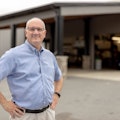
R. Dutch Silverstein
Owner
R. “Dutch” Silverstein, who earned his Accredited Automotive Manager Certificate from AMI, owned and operated A&M Auto Service, a seven-bay, eight-lift shop in Pineville, North Carolina for 26+ years.
Dutch was a captain for a major airline earning type ratings in a variety of aircraft including the Boeing 767/757, 737, 200, 300, and 400 series, Airbus 319/320/321, McDonnell Douglas MD80/DC9 and Fokker FK-28 mk 4000 and 1000. After medically retiring, he transitioned his part-time auto repair business into a full-time occupation.