Key Highlights
- Remember that your core business is building relationships, not just fixing vehicles, and communicate technical issues in plain language to foster trust.
- Always diagnose repairs in-house to ensure accuracy and stand behind your work with guarantees, avoiding reliance on other shops' diagnoses.
- Own your mistakes openly and create a 'Mistake Recovery' plan to maintain customer confidence and loyalty.
- Acknowledge customers immediately upon entry with a friendly greeting to create a positive first impression.
- Maintain a friendly, engaged tone over the phone, and role-play interactions to improve communication skills.
- Set realistic expectations by clearly outlining timelines and potential delays, preventing misunderstandings.
- Have honest conversations about vehicle condition early on to avoid unnecessary expenses and build trust.
- Show appreciation for your customers consistently, treating them like family to foster long-term loyalty.

In an industry as technical as automotive repair, there’s bound to be a few missteps and even some mistakes. And while customers are willing to overlook imperfections—especially when you own them—they can’t forgive failure to correct course when a blunder is clearly avoidable.
Most customer losses aren’t dramatic, but they are preventable. And they add up. Considering that 20% of respondents to the Ratchet+Wrench Industry Survey reported an opportunity per vehicle of $2,000 or more, small, repeated errors can quietly erode revenue if they aren’t corrected.
“Most of the time, most people understand, because they're people, too. They make mistakes,” says Tom Palermo, vice president of Preferred Automotive Specialists in Philadelphia, Pennsylvania. “But your response to (a mistake) as a shop really will determine whether you maintain that relationship with a customer, or whether that's the last time you ever see that person.”
“Consistent documentation, consistent processes, and consistent execution,” says Tom Williams, owner of TDC Auto Repair in Saugerties, N.Y. “(Those are) the biggest things you can do for your customers to make sure that they're taken care of and that you build that loyalty and trust. And that's how you keep a customer forever.”
With nearly 60 years of combined experience, Palermo and Williams break down the everyday mistakes that cost shops customers—and how to correct them.

Mistake 1: Forgetting the business you’re really in.
Although Preferred Automotive works on all types of vehicles from automobiles to buses and fleets to personal vehicles, Palermo says it’s important to remember the real business you’re in first and foremost.
“If you forget that you're in a relationship business, you start to kind of disconnect from your customer. And that's usually where things start to go awry, because then the lines of communication break down, and everybody kind of goes into their opposing corner if there's a problem,” he notes. “And it just falls apart from there.”
He adds that because information is sometimes technical and the terminology may be unfamiliar to your customers, it’s important to rely on service advisors to bridge the gap between the technical jargon and the work that needs to be done. He adds that it takes a savvy professional to handle the service advisor position correctly.
“Being a service advisor is a very unique position and there's a lot of responsibility there that I don't think people understand,” says Palermo, whose 10,000-square-foot shop employs two service advisors among a staff of 20. “They have to have some technical knowledge. They have to have a lot of customer service skills, sales skills, and the ability to kind of lift their head up and spot issues as they're happening in real time. So, it’s not an easy job.”
In addition to being able to use plain language to explain complicated repairs, Palermo adds how you communicate with customers is just as important as who is doing the talking.
He points out that since everyone prefers different types of communication—such as texts, emails, and phone calls—it’s important to determine everyone’s preferred method of communication. Hand in hand with a digital vehicle inspection, he says, is a tried-and-true recipe in building a rapport with a customer.
“The digital vehicle inspections are critical to developing and nurturing the trust between the back of the shop, the front of the shop, and the customer. Because if you call somebody and tell them they need a motor mount, a lot of times, they have no idea what a motor mount is. But when you send them a picture of a broken motor mount, it makes a lot more sense. And when they see that, they're saying, ‘I don't know what the heck that thing is, but I know it looks bad. I better do it.’ And when you give them information to make decisions about their vehicles, it builds the trust that you need to maintain the relationship.”
Fix it Fast: Build a communication system. Ask every customer: “What’s the best way to reach you?” Log their preferred communication method in your CRM and communicate accordingly.
Mistake 2: Trying to repair a vehicle based on another shop’s diagnosis.
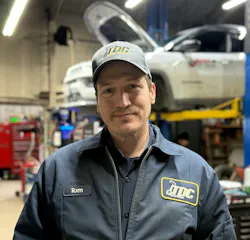
Trying to cut corners by relying on the diagnosis of another shop is bound to backfire, says Williams, who relies on a six-bay shop and four technicians to provide service to all vehicle makes and models. He adds that trying to skip parts of procedures is a surefire way to lose the trust of a customer before they even commit to being one.
“Someone will come in and say, ‘Well, I took it to a shop. They did this and this and they said it needs this. And I'm just not happy with them anymore’,” he explains. “And I'm like, ‘You're not happy with them, but you want me to go off their diagnosis’?”
Instead, Williams says it’s a golden opportunity to not only educate a customer on why it’s a bad idea and to instead re-diagnose a problem to be thorough, but it’s also an opportunity to point out his shop’s 3-year, 36,000-mile guarantee offers peace of mind.
“Then I can remind them that if we diagnose it and we repair it, they’re guaranteed for three years, 36,000 miles,” he points out. “Whether it’s parts or labor failure, if we diagnose it wrong, I can't charge you again, so these are the benefits.”
Fix it Fast: Diagnose each vehicle in-house. Require a full diagnostic review—even if customer “already knows” what the problem is. Remind them that you’ll confirm the issue so that you can stand behind your repair and your work.
Mistake 3: Not owning your mistakes.
As any shop owner knows, there’s bound to be comebacks. And it’s even possible that your shop originally misdiagnosed a problem. If that’s the case, say so, says Williams, even if it means taking a hit on profit.
“You can't necessarily win every time, but what I have seen on multiple occasions is repair shops want to wash their hands of the scenario, and they don't take care of the customer, so they don't stand behind their work and their diagnosis,” Williams explains. “And that is probably what I see most why clients want to leave a facility.”
Williams, who has visited countless shops along the East Coast while working as a Field Representative for Snap-on prior to owning his own shop, says he’s seen owners blatantly lie to people or replace parts unnecessarily all in the name of saving face.
“All because they didn't want to do the due diligence of doing the proper diagnosis, there’s poor communication with the client from the get-go, and all those things combined just make for a terrible experience, which is going to make that customer leave,” Williams points out.
Fix it Fast: When faced with the awkward realization that you’ve made a mistake, own it. And then do your best to correct it. Create a “Mistake Recovery” Playbook that clearly explains how to handle different kinds of mistakes and possible solutions for various problems. Then be sure to follow up with the customer after the situation is resolved.

Mistake 4: Not acknowledging customers when they walk in.
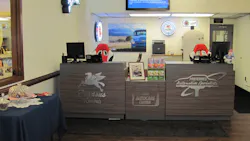
First impressions don’t require much—just attention, Palermo says. Although you might be tied up on a phone call or with another customer, simply acknowledging someone when they walk into the waiting room affirms you want them to be there.
“There's nothing worse for a customer than walking into a place that probably would rather not be in, even if it looks beautiful, and just standing there waiting for somebody to pay attention to them,” Palermo says.
Fix it Fast: Make it a point to welcome every customer with a simple “hello,” eye contact, and a smile.
Mistake 5: Being indifferent.
Nothing sends a bad message to a customer more than a sour—or indifferent—tone. For this reason, Palermo says, the Golden Rule of smiling through a phone call is imperative.
“Your demeanor is very easy to pick up over the phone, whether it's somebody calling you or you calling somebody else,” he notes. “When service advisors speak to customers, they have to do it like it's a long-lost friend who they just bumped into again. And when they do that, they're usually way more successful than if it's just another phone call being made.”
Fix it Fast: Put a mirror on service advisors’ desks to remind them of the tone they are setting in how they look and feel while on the phone.
Bonus: Role-play phone calls monthly and focus on your energy, clarity, and confidence. Rule of thumb: If you sound rushed or indifferent, the customer hears it.
Mistake 6: Failing to set reasonable expectations.
Customers inevitably have a level of expectations when it comes to interacting with your shop, Williams notes, so it’s important to communicate what is reasonable versus their expectation.
“We try to maximize output and take care of as many people as we can in a day, but we are reliant upon parts and other things, and then we have a customer come in for one thing and it snowballs into four or five things. Well, now we had all this other work scheduled,” Williams says. “So you can easily upset the balance of the customer's expectations versus your reality with poor communication.”
Fix it Fast: Create an intake script that outlines timeline expectations and diagnostic processes for various scenarios. Factor in delays for parts and additional findings when customers question changing timelines. Train advisors to use phrases like, “Here’s what we know now—and here’s what could change.”

Mistake 7: Not having difficult conversations.
Both Palermo and Williams agree a simple conversation about the condition of a car might save time and money down the road and ultimately build trust.
“If you see a car and you look at the list and you're, you're thinking yourself, ‘This car may not be worth fixing,’ the time to have that conversation with the customer is before you start going through the whole process,” Palermo suggests. “Ask them what their intentions are with the vehicle.”
Williams adds although you never want to put down someone or their vehicle, a frank conversation might be in order to prevent them from throwing good money down the drain.
“Advise them properly and for the long term as best you can. We're not magicians. We don't have magic eight balls. We don't have a crystal ball,” Williams notes. “But I can tell you when things progressing towards an end.”
Fix it Fast: Avoid jargon-heavy explanations and instead rely on visuals such as DVIs, photos, and videos to illustrate complex repairs and show customers where money may not fix an issue if the vehicle is beyond repair.
Mistake 8: Taking customers for granted.
From big-city locations to back-country roads, Williams says it’s easy to lose sight of the reason you got into this business in the first place—to take care of people.
“I’ve seen places in big-city scenarios, and they’re always located in high-traffic areas. They're always seemingly, for the most part, busy, but they have no customer retention.
They take their customers for granted,” he notes. “Appreciate your customers. Treat your customers like they are your family.”
The $39 Oil Change That Killed a Toyota
A 2001 Toyota Highlander rolled into our shop with 190,000 miles. It was a Colorado vehicle that appeared to be structurally solid. It came in for a scraping and clicking noise. It left with a $280 diagnostic invoice, fluid top-offs, and a hard conversation no shop ever enjoys having:
“It may be time to let this one go.”
The Autopsy
During a road test to examine the original complaint, we duplicated an intermittent noise on acceleration from a stop. The cause? Loose, deteriorated exhaust heat shielding. But the bigger issue was the entire exhaust system was heavily rusted and corroded, with multiple active exhaust leaks.
Annoying? Yes. Fatal? Not by itself. But this was only page one. The list of concerns we noted ranged from no cabin heat to transmission problems to inoperative gauges and sensors to fluids that were never changed or ignored for so long they were unrecognizable.
This was not one failure. These were years of ignored warnings. Individually, the issues may have been manageable. Collectively, the diagnosis was economically terminal.
The Real Cost of “Cheap” Oil Changes
At our shop, a full-service oil change on this vehicle would be around $120. Some customers flinch at that number. Consumers have been trained to believe oil changes are commodities, inspections are optional, warning lights are inconveniences, and maintenance is upselling.
And too many shops are afraid to charge what proper service is actually worth. When we race to the bottom on price, we abandon the role that keeps vehicles alive: early detection, education, and intervention. Because vehicles do not fail all at once. They fail quietly, while everyone is busy saving $40.
Contributed by John Schneible, owner of UpTown Auto, Inc. in Loveland, Colorado
About the Author
 Christine Schaffran
 Christine Schaffran
Editor-in-Chief
Christine Schaffran is the Editor-in-Chief for Ratchet+Wrench magazine at Endeavor B2B. She is an award-winning journalist, having covered both commercial and industry magazines and newspapers during her career. She previously served as Editor-in-Chief for another publisher for 17 years prior to joining Endeavor. When she's not spending time with her husband and son, you'll find her in the kitchen experimenting with new recipes and delicious dishes to try.
Don't miss Christine Schaffran's next article. Sign up for Ratchet+Wrench's Insider and This Month in Ratchet+Wrench's newsletters.