Key Highlights
- Prioritize growing people first, then build the business around their capabilities to ensure sustainable expansion.
- Use structured training programs like Fifth Gear Academy to simulate leadership scenarios and assess readiness without immediate accountability.
- Create a safe environment with 'Mulligan cards' allowing employees to backtrack if they are not suited for leadership roles, reducing turnover and frustration.
- Focus on relationship-building through regular one-on-one meetings and team discussions to foster trust and open communication.
- Expose talented employees to business operations early, providing transparency and opportunities for them to learn and demonstrate their potential.
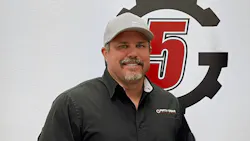
As your business grows, the number of responsibilities increases while the number of hours in a day remains the same. You need someone to handle the things you can’t, and the best choice is likely already in the shop. Ricky Jordan of Fifth Gear Automotive breaks down how to create a reliable second-in-command employee and the critical role they play in expanding your business.
As told to Griffin Matis
The way Fifth Gear operates and how you grow a business—especially a service business—is through replicating and growing people. Don’t look at business first and people second. Instead, grow people first, and then build the business around them.
Some of the obvious things that make people stand out are their capability regarding performance and their abilities in the roles they’re currently in. But what gets people promoted are more of the human attributes, specifically around how they manage themselves internally.
We use the "I versus R" theory—identity versus role. That’s a fancy way of talking about self-esteem. Then there are other basic human elements, like curiosity and humility. As you get into roles of heavy influence over people, typically the very same attributes that made you good at being an individual contributor start working against you. To be a person of influence and a leader, you have to give away so much of what drove you in the first place in the roles you came from.
So, for example, if you already have a high base level of humility and curiosity and some general people skills, you’re just more naturally “set” to achieve success. While these traits are usually what get you promoted, what gets you noticed is your ability to deliver results.
I like starting with the super-high performers, but only if they have enough “human skills” to make them trainable. Then, we let them gain experience in lower-risk situations before putting them in positions where mistakes could seriously impact the business. It’s also important to provide as many scenarios as possible to allow employees to take enough swings at a position before there is real consequence because people will quit a boss pretty quickly if necessary. When you just appoint people blindly, it can become a dangerous situation.
Trying on the Suit
Fifth Gear Academy provides very specific training processes for potential management employees. The Management Development Program exposes them to possible situations they may encounter without having all the accountability of holding the official position. It’s a very specific list of situational objectives and day-to-day tasks they are subjected to. They get to "try on the suit," in a sense, and get a lot of buy-in from the people they will be interacting with as they work toward a higher goal.
I’m a big believer in that kind of working interview. I’m also a big believer that when you start someone in a role of that magnitude, they are given a "Mulligan card" which is essentially a plan to return to the ranks if the position doesn’t work out. Anytime you’re transferring from a position of being a sole contributor to a position of influence, making that jump is tough. A lot of times, people make that jump, but because there’s no exit path back out, it ultimately ends with them moving on to another company or making such a mess of things that they get fired. There has to be a way to backtrack if the employee is in over their head or wants to return to their previous position.
Developing the Relationship
We’re big believers in quality touches where you work on the relationship rather than just working on tactics. With my direct reports, I have a weekly one-on-one with each direct report where I show up, metaphorically, with a blank page. I’m not there to dictate tasks to them; I’m there to listen to what they have to say.
At a minimum, you should ask: What dedicated time do you put into your calendar to work on the relationship between your team and your leader, both on a one-on-one basis and a team basis?
The one-on-ones are a big piece, and then we circle it back around with a team meeting where I just facilitate a great conversation across peers. I will throw out topics for discussion, but I sit back and let the team talk it out. I do pepper enough influence into the conversation to steer them to where they need to land, but it’s still a better alternative to just handing out an action-item list.
Taking the First Step
It can be easy to overthink in the beginning. Identifying people of good character is really the only box to worry about checking initially. What I see shop owners being very guilty of—especially early on in the process—is not giving talented employees a chance to learn the business side of the shop. Then they’re frustrated when those employees aren’t ready for leadership roles. Before holding someone accountable for managing people, profits, or operations, you have to give them exposure to those responsibilities and let them learn how the business works.
I’m very transparent with what I do, how I do it, what I manage, and what’s important to me financially. As a result, the candidates know what ladders to climb, and it’s easier to pick out high-potential people because they’re already demonstrating the skills needed to succeed at the next level. If you’re very guarded with your finances, your management style, and your communication style, and you’re not vulnerable, then it’s no wonder no one is showing up like you do—you’re not giving them anything to show up to.
So, my advice to shop owners is to provide lots of exposure and build people into your image for the business. Building people is a pretty simple recipe; it just takes discipline, execution, and time. I like to use the barbecue analogy. It’s the simplest recipe on the planet: salt, pepper, smoke, and time. The time part is what people typically don’t factor into the equation very much. Look for the right human characteristics and just expose them to as much as possible, long enough for them to figure it out.
About the Author
 Griffin Matis
Griffin Matis
A graduate of the University of Missouri School of Journalism, Griffin Matis writes for Ratchet+Wrench magazine. Previously, he wrote and edited digital content relating to health, entertainment, pop culture, and breaking news.