The Second-Tech Test: Training Technicians to Question AI
AI-assisted estimates can help repair shops organize diagnostic information, but recommendations still need to be supported by evidence. Dr. Gleb Tsipursky, behavioral scientist and author of "The Psychology of AI Adoption at Work: From Resistance to Results," outlines how shop owners can use AI-generated estimates as a training tool rather than a substitute for diagnosis.
Q: What is the second-tech test, and how can a shop owner put it into practice?
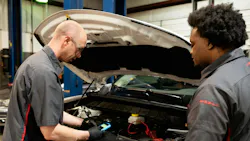
A: For the second-tech test, a shop owner starts with a realistic, de-identified or simulated repair scenario and an AI-assisted estimate. An apprentice and an experienced technician review the same symptoms and estimate independently before comparing notes. Each marks which recommended operations are supported by the available evidence, what remains an assumption, and what additional checks would be needed. They then discuss their findings with the owner or service manager. The goal is to practice diagnostic judgment, not to let an exercise authorize actual repairs.
Q: What should technicians look for when reviewing an AI-generated estimate?
A: Technicians should separate observations from conclusions. A fault code, customer symptom, vehicle history, service information, or physical test may support a hypothesis, but an AI-generated recommendation alone does not establish the cause. For each estimated operation, ask: What evidence connects the symptom to this repair? What plausible alternatives remain? What test or manufacturer procedure would confirm the diagnosis? An estimate that sounds confident but cannot answer those questions deserves further investigation.
Q: How can this exercise help develop less-experienced technicians?

A: The apprentice learns how an experienced technician weighs conflicting evidence, rules out alternatives, and explains uncertainty to a customer. Simply following a checklist may teach a procedure without teaching when its assumptions are wrong. The senior technician should explain the reasoning and then ask the apprentice to reconstruct it rather than supplying every answer. Over time, reverse the roles and let the junior technician lead the review.
Q: What should a shop do when an AI-generated estimate and a technician's findings disagree?
A: When the AI's estimate and a technician's findings disagree, pause approval of the disputed work. Document both interpretations, check the relevant service procedures and diagnostic data, and run the appropriate confirming tests. If disagreement remains, bring in a second qualified technician or the shop's diagnostic lead. The customer should hear what is known, what remains uncertain, and why any additional diagnostic step is justified. Neither the model nor the senior technician should win the argument by authority alone.
Q: How can shop owners measure whether the exercise is working?
A: To measure progress, record how many unsupported recommendations are caught, how often apprentices identify the necessary confirming test without prompting, and whether their explanations become more accurate across comparable exercises. Shops can also watch diagnostic rework and comebacks, while recognizing that those figures have many causes. Use a simple before-and-after rubric for the quality of the reasoning, rather than celebrating the number of AI suggestions accepted or the apparent speed of estimate generation.
Q: What's the biggest mistake shop owners should avoid when incorporating AI into estimating and diagnostics?
A: The biggest mistake is turning AI output into a diagnosis or treating a technician's approval click as meaningful oversight. Use the tool to generate possibilities and save clerical time, while maintaining evidence-based diagnosis, qualified human authorization of repair work, and clear customer communication. If the team cannot explain why an operation is needed without citing the AI, the technology is getting ahead of its training process.